Article
What Is a tDCS Headset for Depression?
Brain stimulation, Treatment options

Brain stimulation, Treatment options
- Antidepressants cause significant side effects for many people. The majority of people taking prescription antidepressants experience side effects, and many have multiple side effects. Some of these side effects are severe enough to impact quality of life.
- tDCS uses mild electrical current to modulate brain activity. Transcranial direct current stimulation interacts with brain cells and nerves through gentle electrical current, influencing neural activity patterns without invasive procedures.
- tDCS differs from TMS and ECT in intensity and mechanism. Unlike ECT (highly effective but with significant side effects like memory loss) or TMS (magnetic stimulation), tDCS uses gentler electrical current with fewer side effects.
- Flow tDCS targets depression through DLPFC stimulation. The Flow device stimulates the dorsolateral prefrontal cortex, a brain region involved in mood regulation. This targeted approach treats depression at its neurological source.
- Research shows tDCS effectiveness matches other antidepressants. Studies suggest that tDCS is may offer comparabie benefits to other types of antidepressant treatments. This evidence supports tDCS as a legitimate alternative or complement to medication.
What is a tDCS headset?
A tDCS headset (transcranial direct current stimulation headset) is a wearable device that delivers a low-strength electrical current to specific areas of the brain through electrodes placed on the forehead. Unlike clinic-based treatments, a tDCS headset can be used at home, making brain stimulation therapy more accessible for people with depression.
You may also hear these devices called "brain stimulation headsets" or "depression headsets" - they all refer to the same technology: using gentle electrical currents to activate underperforming regions of the brain associated with mood regulation.
After being diagnosed with depression, it is normal to wonder, what can I do to feel better? Treatments come in many forms - from lifestyle changes to prescription medicines. However, there isn't a treatment type that is suitable - or even works - for everyone.

More than 60% of people taking prescription antidepressants experience at least 10 side effects, and some of them are pretty severe. At the same time, psychotherapy is not always accessible, or desirable.
Even if a depression treatment does have a positive effect, it probably won't treat all symptoms. Most likely, it will take a mixture of several approaches to fully recover from depression.

Finding the combination of treatments that will produce the best results for you takes a bit of trial and error. If the treatments you've tried haven't been effective or right for you, there's still hope.
While medication and psychotherapy are the most common treatments, they are far from the only ones available. One option that stands out has:
- No severe side effects
- No waiting lists
- And is as effective as other antidepressant treatments
This evidence-based treatment is known as transcranial Direct Current Stimulation, or simply, tDCS.
tDCS is a versatile treatment option. It can be used alone or in combination with other treatment approaches. If you haven't heard of tDCS before, it's probably because for many years it was only available in a clinical setting.
Today, there is a medically-approved tDCS device for home use, and it is available online without a prescription.
Before we go further into that, let's back up and talk about the technology behind tDCS.
tDCS: The History
tDCS is a type of depression treatment known as brain stimulation. This means that it interacts with brain cells and nerves through a very mild electric current. While this wouldn't be out of place in a sci-fi movie, tDCS is actually quite an old technology.

Ancient Romans used the currents emitted by electric fish to treat nerve pain, and tDCS was first used as an effective depression treatment way back in the 19th century.
tDCS headsets have been used by psychologists and mental health clinicians since the 1970s. And in 2019, Flow Neuroscience had created the first medically-approved tDCS headset for at-home use.
The Flow tDCS headset has undergone rigorous IEC compliance and European Union CE-mark testing. The device also has important safety features that eliminate the risk of adverse side effects.
Anyone with a clinical diagnosis of Major Depressive Disorder (depression) can try Flow — it doesn't require a prescription or a doctor's approval.
tDCS vs TMS vs ECT: What's the Difference?
Besides tDCS, there are other treatment protocols that relieve depressive symptoms through brain stimulation. The best-known are:
- Electroconvulsive Therapy (ECT)
- Transcranial Magnetic Stimulation (TMS)

ECT is reserved for the most severe cases of treatment-resistant depression. It can only be performed in a clinical setting and under the direct supervision of a medical professional. ECT is helpful and highly effective but has significant side effects such as memory loss. For this reason, it is usually only used as a last-resort treatment.
TMS is a much milder treatment than ECT and uses magnetic fields rather than electricity to stimulate the brain. TMS is effective, non-invasive, and well-tolerated (although there is a minuscule chance of serious side effects). However, it can only be done in a medical setting. Most people will need at least 30 once-per-day sessions to see a change in their symptoms.

tDCS, like TMS, is also mild and non-invasive. However, tDCS has no severe side effects. While most tDCS treatments are designed for clinical use, the Flow tDCS device is portable and battery-powered, making it possible to undergo treatment at home.
How the Flow tDCS Headset Treats Depression (Flow device explained)
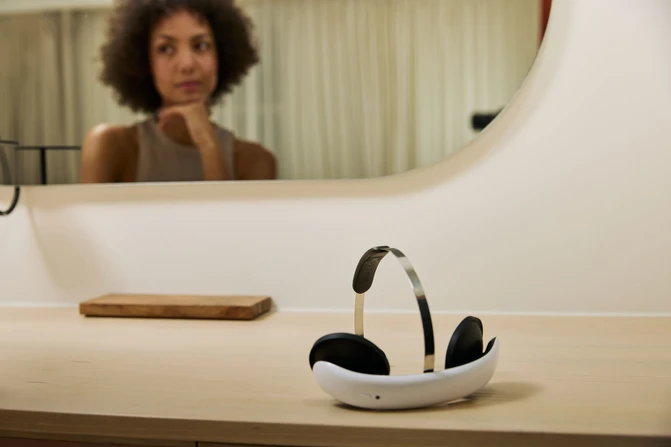
The Flow tDCS device resembles a headset or small headband with two electrodes. During a session, these electrodes will go on either side of your forehead and send out a minor electric current. This passes through the dorsolateral prefrontal cortex (DLPFC) – a brain area that often under functions in patients with depression (specifically the left side of the DLPFC).
The current helps neurons in that region to "fire up" and make them more active. A more active DLPFC can raise your mood and reduce your depressive symptoms.
This effect is so strong in fact, that research shows that tDCS is as effective as other types of antidepressant treatments. In some studies, tDCS have made SSRIs (a common type of antidepressant) even more effective.
What Is It Like To Use a tDCS Headset?
If you're curious about tDCS, you can rent a Flow headset online and get it delivered to your door. You can take the device right out of the box, charge it, and use it within the same day. Before you begin your first session, download the Flow app.
Setup basics: electrodes, sponges and placement
When you look at the headset, you will see two holder rings, which fit two circular sponges. These holder rings are electrodes and will fit on either side of your forehead. In the app, you will find a helpful instruction video that walks you through the process of placing the headset correctly.
Once you press the start button on the app, you're all set. The electrodes will start to emit a very low voltage current.
What it feels like during a session
This may sound intense but don't worry, tDCS sessions are typically painless.
You might feel a slight tingling or warming sensation on your skin. This is normal and will stop as soon as you are done with your session. Also, you will probably notice that this reaction will fade as you get used to the device.
During the session, you can do any of your usual activities. Some people like to draw, knit, watch T.V., read, or just relax.
How long a session takes
A typical session lasts around 30 minutes, and the headset will shut off by itself. When you're done, you might notice a boost in your mood or energy right away.
How often should you use a depression headset for best results?
Following your first session, you will need to continue tDCS sessions 5 times a week for 3 weeks. After that, you can scale back and do sessions a couple of times a week.
If you'd like, you can combine the headset with the Flow in-app treatment program, which will help you make important lifestyle changes, like improving your sleep quality and nutrition. The in-app treatment program also contains meditation exercises and suggestions for incorporating more movement into your life.
Like the headset, you can use the Flow in-app treatment program on its own, or in combination with other treatments. You can do whatever works for you and your lifestyle [read here on how to use the Flow treatment long-term]
How to Compare Depression Headsets (Flow device vs other tDCS and TMS headsets)
When evaluating tDCS devices for home use, there are several key factors to consider beyond price and convenience.
Evidence and clinical validation
Look for devices backed by peer-reviewed research and clinical trials demonstrating effectiveness for depression. The strength of evidence varies significantly between products, with some having extensive validation whilst others make claims based on limited studies.
Check whether the device has been tested specifically for depression treatment, not just general brain stimulation. Published research should show measurable improvements in depression symptoms, ideally using standardised assessment tools like the MADRS or HAM-D scales.
What certifications and approvals to look for
Medical device certification is essential for safety and efficacy. In Europe, look for CE marking under the Medical Device Regulation (MDR), which indicates the device meets strict EU safety standards. In the US, FDA clearance or approval demonstrates regulatory scrutiny.
Certification from standards bodies like IEC (International Electrotechnical Commission) shows the device has undergone rigorous technical and safety testing. These certifications aren't just formalities - they're your assurance that the device has been independently validated.
Safety features and contraindications
A quality tDCS headset should have built-in safety mechanisms to prevent overuse, incorrect current delivery, or placement errors. Features like automatic shut-off, current monitoring, and guided placement through an app reduce the risk of adverse effects.
Be aware of contraindications. tDCS is not suitable for everyone - people with certain medical conditions, implanted devices, or a history of seizures should not use brain stimulation devices without medical supervision. Reputable manufacturers clearly communicate these limitations.
FAQs about tDCS headsets
How do brain stimulation headsets compare to traditional therapies?
Brain stimulation headsets like tDCS devices work differently to traditional depression treatments. Whilst antidepressants alter brain chemistry through medication and psychotherapy addresses thought patterns through conversation, tDCS directly stimulates underactive brain regions using electrical currents.
Research shows tDCS can be as effective as antidepressants, with the advantage of no systemic side effects and no waiting lists typical of talking therapies. However, tDCS isn't necessarily "better" - it's an additional option that works well alone or combined with other treatments.
Can a headset really help treat clinical depression?
Yes, when used correctly. Clinical studies have demonstrated that tDCS can significantly reduce symptoms of Major Depressive Disorder. The technology has been used in clinical settings since the 1970s, with home-use devices becoming available more recently.
The key is consistency - most people need regular sessions over several weeks to see meaningful improvement. tDCS works by gradually reactivating the dorsolateral prefrontal cortex, a brain region that typically shows reduced activity in people with depression.
Are tDCS headsets safe?
tDCS headsets that have received medical device certification are considered safe for home use when used according to instructions. The electrical current used is very low (typically 1-2 milliamps), far below levels that could cause harm.
The most common side effects are mild and temporary - slight tingling, warmth, or skin redness where the electrodes sit. Unlike ECT, tDCS does not cause memory loss or require anaesthesia. However, people with certain medical conditions should consult a healthcare provider before use.
How often should you use a depression headset for best results?
The standard protocol is 5 sessions per week for 3 weeks (15 sessions total), with each session lasting 30 minutes. This intensive phase helps build therapeutic momentum by consistently activating the target brain region.
After the initial 3 weeks, many people maintain results with 2-3 sessions per week. The exact session frequency can be adjusted based on individual response and symptom severity by a doctor. Consistency matters more than intensity - regular use produces better outcomes than sporadic sessions.
What's the difference between a tDCS headset and TMS?
Both tDCS and TMS stimulate the brain to treat depression, but they use different mechanisms. TMS uses magnetic fields to induce electrical currents in the brain, whilst tDCS applies electrical current directly through electrodes on the scalp.
TMS is more powerful and requires clinic visits for 30+ sessions, typically costing thousands of pounds. tDCS is gentler, can be used at home, and costs significantly less. Both are effective, but tDCS offers greater convenience and accessibility for people who can't commit to daily clinic appointments.
What is transcranial direct current stimulation headset treatment?
Transcranial direct current stimulation headset treatment is a non-invasive approach that uses low-level electrical currents to stimulate specific brain regions involved in mood regulation. "Transcranial" means "through the skull" - the current passes from electrodes on your forehead through your skull to reach the brain tissue beneath.
The treatment targets the dorsolateral prefrontal cortex (DLPFC), which often shows reduced activity in people with depression. By gently stimulating this area, tDCS helps neurons become more active, potentially improving mood and reducing depressive symptoms over time.
So, tDCS is an approach that can help you tip the scales when it comes to managing your depression. If you are thinking of trying tDCS, the Flow headset is the safest and easiest way to see if it is right for you.
Sources
Related articles


