Article
At-Home Brain Stimulation: Is It Safe to Treat Depression From Your Sofa?
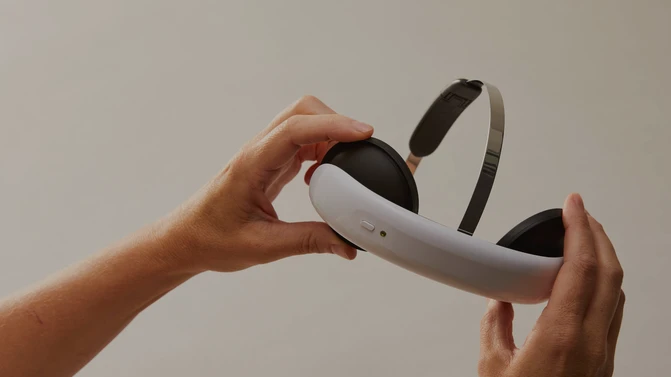
Brain stimulation

Brain stimulation
- At-home brain stimulation for depression usually means tDCS: a non-invasive treatment delivering a low-level electrical current, typically 1 to 2 milliamperes, through electrodes on the scalp for around 30 minutes per session.
- tDCS is not ECT. ECT uses a current hundreds of times stronger, produces a brief controlled seizure, and requires a general anaesthetic in hospital.
- The regulatory category matters more than the technology. Certified medical devices have been independently assessed for safety and efficacy. Wellness gadgets and DIY kits sit in a grey area with minimal oversight.
- In the largest trial of home-based tDCS to date, people using active stimulation were roughly twice as likely to reach remission as those using a placebo device, with 57% of them being depression-free by 10 weeks
Introduction
For most of my career, offering someone brain stimulation for depression meant sending them somewhere else to have it, usually a hospital or a clinic, on a waiting list, under supervision. That has changed. There are now devices built for use at home with no clinician in the room, which understandably leaves people asking whether this is progress or something to be wary of.
That caution is fair, and the honest answer depends almost entirely on which device you are looking at. "At-home brain stimulation" now covers certified medical devices with published trial data alongside unregulated kit sold as wellness gadgets, and the gap between those two things is enormous.

What Is At-Home Brain Stimulation?
The basics of tDCS
Most at-home brain stimulation for depression uses transcranial direct current stimulation, or tDCS. The principle is fairly simple: Two electrodes sit against the scalp and deliver a low-level electrical current, typically between 1 and 2 milliamperes, for around 30 minutes. This is a gentle treatment used whilst fully awake. No surgery is involved and nothing is implanted, which is why the treatment is described as non-invasive.
For depression, the target is the dorsolateral prefrontal cortex, or DLPFC, a region towards the front of the brain involved in mood regulation, motivation and concentration. Depressive symptoms have been associated with reduced activity in this area [Ref 1].
The current does not force brain cells to fire. Instead it modulates their resting membrane potential, which in plain English means it adjusts how excitable and prone to activity the cells are, and the effect builds over repeated sessions.
How tDCS differs from ECT
This distinction matters, because people sometimes conflate the two, and we carry a long legacy in psychiatry around how the public perceives electroconvulsive therapy.
ECT delivers around 800 milliamperes, produces a brief, controlled seizure, and is given under general anaesthetic in a supervised clinical setting [Ref 2]. tDCS delivers a current hundreds of times weaker. There is no seizure, no anaesthetic and no hospital visit. The person stays awake and, with the Flow headset, may carry on with ordinary activities around the house.
ECT remains a valuable treatment, but is usually reserved for cases of severe or life-threatening depression. Although tDCS and ECT both use electricity, they are very different interventions, and I would not want anyone confusing what tDCS involves with what they know about ECT.

The Regulatory Landscape: Why It Matters
What is the actual difference between a regulated medical device and a wellness product?
Two devices may look alike, use similar technology and make similar-sounding claims, and still sit in completely different regulatory categories. This can be confusing for people trying to make sense of what is available.
A regulated medical device has been assessed by an independent regulator for both safety and efficacy in treating a specified condition. That means scrutiny of the clinical evidence, the manufacturing standards and the safety, and it governs what the device may claim. The regulatory process and body involved varies depending on the country.
Some devices may only have regulatory approval in one part of the world whereas others may have approval across many different markets. A consumer wellness product has been through none of that. The device may be perfectly well made, and some of them are, but there is no requirement to demonstrate that it treats anything.

Flow's regulatory position
Flow has longstanding regulatory approval by the UK’s MHRA (Medicines and Healthcare products Regulatory Agency) which is the body responsible for regulating the UK medical devices market, and has been used within a number of NHS services, including community mental health, crisis and perinatal teams, although availability varies considerably between areas.
Flow also has received regulatory approval by the TGA (Therapeutic Good Administration) of Australia.
In the US, Flow received FDA Breakthrough Device designation in 2022, which the FDA reserves for treatments expected to make a real difference in serious conditions, and has since received FDA premarket approval (PMA) for the FL-100 headset to treat major depressive disorder (MDD). It is the first at-home tDCS device approved by the FDA for depression treatment.
In Europe the Flow headset has been CE certified since 2019 and more than 65,000 people have now used it [Ref 4], which is a great deal of real-world experience for a new treatment. In late 2025, the Flow headset was awarded CE marking under EU MDR 2017/745 from its Notified Body BSI.
This was part of a new, more rigorous updated process for EU medical devices to undergo regulatory approval.
I see CE marks on lots of everyday appliances, so what does this actually mean?
Flow’s CE mark means something very different compared to a CE mark on a wellness device.
The CE symbol stands for Conformité Européenne (European Conformity) and shows that a product meets legal standards to be sold in the European Economic Area. CE marking is mandatory in the EU for a wide range of product categories including toys, safety gear, machinery, electrical appliances, and medical devices.
A CE mark on a wellness device and a CE mark on a medical device fall under completely different sets of European legislation, even though the physical logo looks the same.
For a wellness device, the CE mark is simply proof of meeting basic standards for things like electrical safety, and non-toxicity (in the same way a hairdryer would hold a CE mark). This type of CE mark is usually self-certified by the manufacturer through generic lab testing and cannot be used to make any claims regarding the device having any intended medical purpose.
Medical devices such as the Flow headset, must follow the far stricter EU Medical Devices Regulation (MDR) process to secure CE marking.
This is a detailed and rigorous approval process which is undertaken independently by an official EU Notified Body (BSI), who conduct a robust audit, appraisal of clinical evidence, technical review, performance validation, safety and risk management, and review of post-market surveillance.
Flow’s CE marking under EU MDR 2017/745 from its Notified Body BSI, confirms its clinically proven efficacy for treating major depressive disorder and its safety as a low-risk active medical device.
The problem with unregulated home devices
There is a growing market in inexpensive home brain stimulation devices and DIY kits. Most are sold as wellness products, which unfortunately places them in a regulatory grey area with minimal oversight and allows people to buy and self-administer something resembling treatment, often without their doctor knowing [Ref 3].
The current itself might be low, but in many cases, everything around it is unspecified. Nobody has verified the protocol. There is no way of confirming the electrodes are sitting where they need to sit to reach the area you are aiming at.
Whoever sold the device has no obligation to report back on safety or side effects. So how would anyone treating a serious illness this way know whether what they are getting bears any relation to what was studied?

What Makes Flow's Protocol Safe for Home Use?
A closed, controlled system
For me this is the most important part of the answer. The Flow headset and app work as a closed system, and the person using it cannot alter the stimulation parameters. The electrical current, session length and electrode placement are fixed by the clinical protocol built into the device, and the protocol delivered at home is the same one used in the clinical trial. Nobody can turn the current up on a bad day or add extra sessions hoping to get better faster.
Flow's chief technology officer has described the design philosophy in similar terms, noting the headset was built specifically for safe use at home without supervision [Ref 6].
Building in that constraint is what makes it reasonable to hand the treatment over at all. Flow is regulated like medicine, because it is.
Clinical oversight built in
Flow is not only a device. Before starting, users complete a clinically validated depression questionnaire, and progress is tracked throughout using the MADRS-s, the self-rated version of a scale used internationally in clinical practice and research. Where a clinician is involved, they may review that data remotely through a clinician portal.
We always recommend consulting your doctor. Depression is a serious condition requiring medical support. Decisions about other treatments such as medication or therapy, exploring other diagnoses sitting alongside depression, checking for physical health issues, considering any support required to address risk, and agreeing on a plan about what to do if things do not improve, all need someone who can see the whole picture, and that is complicated to manage alone.
Stopping antidepressant medication abruptly, for instance, may be genuinely harmful, and is not something to attempt without medical supervision because a new treatment seems to be working.

Evidence from the largest clinical trial
In October 2024 the largest trial to date of home-based tDCS for depression was published in Nature Medicine [Ref 5]. Led by King's College London with the University of East London and UTHealth Houston, it was fully remote, multisite, double-blind and placebo-controlled. A total of 174 adults with at least moderately severe major depressive disorder were randomly assigned to active stimulation or an identical-looking placebo (or “sham”) device over ten weeks.
Participants using active stimulation showed significantly greater improvement in their depressive symptoms and were roughly twice as likely to reach remission as the placebo group, at around 45% compared with 22%. Measured on the MADRS scale, 57% of participants were depression-free at ten weeks [Ref 4].
Benefit was also seen in participants who were taking antidepressants or having psychotherapy alongside the treatment, with results improving further when antidepressant treatment was combined with Flow.
Although there is an established evidence base for the Flow treatment, it is still important to understand that this does not guarantee that Flow will work for an individual. Patient responses may vary a great deal, as they do with every depression treatment I have prescribed over the years, which is why I would always describe home-based tDCS for depression as an option worth considering rather than one that works for everyone.
What Are the Side Effects?
Minor and generally well tolerated
Around 95% of Flow users report no side effects at all [Ref 4]. That is a strikingly low rate for any treatment in psychiatry. Where side effects do occur they tend to be minor: mild skin irritation or redness near the electrodes, and occasional headaches. Across a real-world dataset of more than 40,000 users, no serious side effects have been reported.
The sensation during a session is usually described as a mild tingling or itching under the electrodes, and most people stop noticing it after the first few sessions. Some redness on the forehead afterwards is common, caused by increased blood flow, and does not necessarily mean a skin reaction.
Safety considerations
Flow should not be used whilst driving, operating machinery, moving vigorously, or when in contact with water.
If any of the following applies, seek medical advice before using Flow:
Who Is Flow Suitable For?
Flow is intended for adults experiencing depression, either as a stand alone treatment or combined with medication or therapy. The clinical trial recruited people with moderate or severe depression, and in my own practice I have used it with a range of patients experiencing mild, moderate, and severe depression from age 18 through to their 70’s.
Some in their first episode of depression and on no other treatment, whilst others have had longstanding recurrent depressive illness, and were already taking antidepressant and sometimes other medications.
The headset may be used alongside antidepressants, and trial data indicates that remissions rates are higher when it’s used in combination with medication [Ref 4].
Whether it is right for you is best worked through with a clinician who knows your history.

Could Flow be right for you?
Take our 2-min quiz and learn if Flow could be a good option for you.
Flow is a medical device approved for the treatment of depression. Approved treatments for depression should be discussed with and supervised by your doctor.
Key Takeaways
- At-home brain stimulation for depression usually means tDCS: a low-level current, typically 1 to 2 milliamperes, delivered through scalp electrodes for around 30 minutes.
- tDCS is not ECT. ECT uses a current hundreds of times stronger, produces a controlled seizure and requires a general anaesthetic in hospital.
- Regulation is what separates the two categories. An medical device with regulatory approval has been independently assessed for safety and efficacy in treating a named condition. Wellness gadgets and DIY kits have not.
- A well researched, regulated medical device with a fixed protocol is what makes unsupervised home use appropriate. A device that has not undergone rigorous safety testing, scientific study, or if the user is able to change the current, the duration or placement cannot be compared to one that has.
- In the largest trial of home-based tDCS to date, active stimulation with the Flow headset roughly doubled the likelihood of remission compared with placebo, with additional benefit also seen in people who were already on antidepressants.
- Side effects are usually minor, most commonly mild skin irritation and occasional headaches, and around 95% of users report none at all.

Closing Thoughts
At-home brain stimulation is a legitimate, evidence-based option for depression when the device is properly researched, regulated, certified, and the protocol is fixed. If you are weighing your options up, look further at how the treatment works, take the quiz for a personalised sense of whether it fits, and discuss with your GP or psychiatrist. Decisions about treating depression are much better made with someone who knows your history.
About the author
Dr Hannah Nearney MBChB, MRCPsych, MSc, PGDip(CAT) is a Consultant Psychiatrist specialising in general adult psychiatry, including adult ADHD, autism, and women's mental health. She is UK Medical Director at Flow Neuroscience and a founding partner at Anchor Psychiatry Group in East Anglia. She is a Fellow on the NHS Innovation Accelerator program (2026 cohort) which provides support to scale evidenced-based innovations like Flow tDCS in the NHS to enhance patient outcomes and service delivery. Follow her on Instagram: @psychiatristhannah
References
- [1] Flow Neuroscience, How It Works: tDCS mechanism and DLPFC target. https://www.flowneuroscience.com/how-it-works/
- [2] King's College London press release (October 2024): tDCS versus ECT, and the safety and efficacy of home-based tDCS. https://www.kcl.ac.uk/news/brain-stimulation-depression
- [3] Medscape (October 2024): the DIY brain stimulation landscape and the regulatory grey area. https://www.medscape.com/viewarticle/diy-brain-stim-growing-popularity-it-safe-effective-2024a1000iti
- [4] Flow Neuroscience, Evidence: remission at 10 weeks, side-effect incidence, user numbers, and combined use with antidepressants. https://www.flowneuroscience.com/evidence/
- [5] Woodham et al. (2024), Nature Medicine: the largest trial of home-based tDCS for depression, with 174 participants. https://www.nature.com/articles/s41591-024-03305-y
- [6] IEEE Spectrum (February 2026): Flow's CTO on the design philosophy for safe at-home use without supervision. https://spectrum.ieee.org/flow-neuroscience-tdcs-depression-fda

