Article
How to Build a Sleep Routine When You’re Depressed (That You Might Actually Stick To)

Depression

Depression
- Most sleep hygiene advice assumes a level of energy and motivation that depression erodes, which is why it so often fails the people who need it most.
- Anchoring one consistent wake time matters more than a perfect bedtime. You cannot decide when you fall asleep, but you may set an alarm.
- Morning light, a slightly cooler room and dimmer evening screens are low-effort changes worth trying. Aim for slightly better than last week, not ideal.
- Sleep and depression travel in both directions, so treating the depression itself is often the most direct route to better sleep. If low mood or poor sleep has lasted more than two weeks, speak to your GP.
Introduction
If you are depressed, you have probably already heard the standard sleep advice, and you know exactly how hard it is to follow in reality. None of it is bad advice, but most of it assumes a level of energy and structure that depression takes away, leading to a mismatch between the advice and your circumstances.
This article starts from where you actually are, not from where you would be if you were not depressed, and builds from there in small, manageable steps.

Why Standard Sleep Advice Often Falls Apart With Depression
Look closely at standard sleep hygiene advice and a pattern emerges. Nearly every item on the list assumes a working level of motivation, structure and energy, which are precisely the things depression erodes first.
“Go to bed at the same time every night” depends on a routine you may no longer have. “Avoid screens for two hours before bed” assumes there is something else you feel able to do with those two hours. “Exercise in the afternoon” lands rather differently when getting dressed has already taken everything you had.
The advice is not wrong, but the difficulty is that it was written for someone who is not struggling with depression. When people cannot follow what is recommended they may not see this as the problem and instead blame themselves, which makes everything harder.

Building a Routine That Works With Depression
The approach I take with patients is deliberately modest, because over-ambition is usually what breaks these plans.
Start with one thing, not a list
Most sleep guides hand you ten things to do. Ten things is a plan for somebody with more energy and spare capacity. Pick one instead, and make it the smallest one you can think of. Something you could still manage on a difficult day, rather than a good one.
A few examples of what that might look like:
Anchoring to your wake time rather than your bedtime is worth explaining, because it tends to surprise people. You cannot decide when you fall asleep. Sleep arrives when it arrives.
What you may decide is when you get up, and a consistent wake time, together with the daylight that follows it, does more to steady the body clock than a bedtime you keep missing. One dependable anchor at the start of the day is worth more than a sleep schedule that is challenging to maintain.

Using external prompts instead of willpower
Willpower is a poor tool when you are depressed, and it is also the one that most sleep advice depends on. External prompts can do the same job and ask far less of you. An alarm labelled “lights off”, a reminder half an hour before you want to start winding down, a lamp on a timer.
None of these require you to remember anything, or to make a choice at ten o’clock at night when deciding is hardest.
Automation of this kind is not cheating. When motivation is scarce, spending it once on setting up a system beats spending it again every evening.
The good-enough standard
A perfect sleep routine is not the target. A slightly better one is.
If last week ran from 2am to midday, then 1am to 10am is real progress and well worth recognising as such. Measuring where you are now against where you would be if you were well is a reliable way to feel worse. Measure against last week instead.
I describe a version of this to patients often. When someone is depressed, big plans feel overwhelming and tend to collapse, eroding confidence with them. Small and consistent will always beat ambitious and abandoned.

Adapting Classic Sleep Advice for Depression
Some of the standard advice does hold up well. The trick is scaling it down to something you can actually reach.
Light and darkness
Morning light is probably the most useful item on this list. Daylight in the first part of the day is the main signal your body clock uses to set itself, which is why the timing of it matters more than the effort involved. Sitting near a window for ten minutes after waking counts. No exercise required, no going outside, no getting dressed first.
The research on sleep timing is interesting here, though it deserves careful reading. A large genetic study found that each one hour earlier sleep midpoint, meaning the halfway point between falling asleep and waking, was associated with a 23% lower risk of major depressive disorder [Ref 1].
That finding comes from genetic data rather than from an experiment in shifting people’s bedtimes, so I would read it as a good reason to protect your mornings rather than a promise about what an earlier night may do for you.
Evenings are where the standard advice becomes least realistic. A two hour digital curfew is not going to happen for most people who are depressed and using their phone to get through the evening. Turning your screen brightness down twenty or thirty minutes before sleep is achievable, and a far more sensible place to start.

Temperature
Body temperature drops as sleep begins, and a slightly cooler bedroom supports that shift rather than working against it. Around 16 to 18 degrees Celsius is the range usually suggested. What I like about this one is that it costs nothing in energy. Turning a radiator down or leaving a window open is a change you make once, and it then works away in the background while you do nothing at all.
Consistency over perfection
An imperfect but consistent bedtime tends to serve your body clock better than an ideal one you cannot maintain. Irregular sleep timing is associated with poorer mood outcomes, and disturbed sleep and depression reinforce one another in both directions [Ref 2]. Going to bed at half past midnight most nights may well do more for you than aiming for ten o’clock and rarely getting there.
What to Do When You Cannot Sleep
Even a well-built routine may leave you with difficult nights. Two things are worth knowing about those.
Do not lie there fighting it
If you have been awake for around twenty minutes and are becoming frustrated or anxious, getting up is usually better than staying put. Go to another room if you can, do something undemanding in low light, reading or listening to something gentle, and go back to bed when you feel sleepy rather than when you feel you ought to.
This is not a trick for falling asleep faster. Stimulus control is a core principle of cognitive behavioural therapy for insomnia, and it works by protecting the association between your bed and sleep [Ref 4]. Hours spent lying awake and frustrated teach your brain to link the bed with wakefulness and frustration, not sleep. Getting up interrupts that lesson.
CBT for insomnia is the recommended first line treatment for persistent insomnia and is usually available through the NHS, often as an online programme, so it is well worth asking your GP about [Ref 4].
Managing 3am thoughts
Waking at three in the morning with your mind already running away with itself is one of the most common experiences patients describe to me, and one of the most wearing. The thoughts that arrive at that hour are rarely reasonable and almost never solvable.
Three things are worth trying:
None of these will work every night, and I would be wary of anyone who tells you otherwise. They may take the edge off enough to let sleep return, which on some nights is all you need.
How Treating Depression Changes Sleep
Everything above is worth trying. None of it addresses the reason your sleep changed in the first place.
Sleep problems and depression run in both directions. Disturbed sleep is one of the recognised features of a depressive episode, and poor sleep in turn makes depression harder to shift [Ref 2].
Presentations vary, and some people find they sleep considerably more than usual when depressed rather than less. Either way, the practical consequence is much the same: when depression is treated effectively, sleep often improves alongside it.
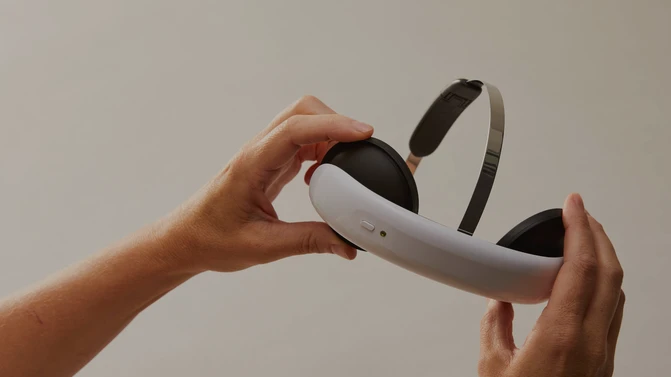
Flow, the treatment I work with as UK Medical Director, is one option to consider among several. Flow is a non-invasive, FDA approved and CE certified home treatment for depression, delivering a gentle electrical current to the dorsolateral prefrontal cortex, an area involved in mood regulation [Ref 5].
In a retrospective analysis of over 6,000 depressed users reporting insomnia, among those who kept to the treatment protocol, around a third reported their sleep symptoms had reached remission after one week and roughly two thirds by week ten [Ref 6].
Real-world data of this kind [Ref 3] is encouraging rather than definitive, and any treatment decision belongs in a conversation with your own doctor.
The wider point is that insomnia in those who are low in mood often improves when the depression is being treated too.
Flow, could it be right for you?
Find out whether Flow could be a fit for your depression treatment.
Key Takeaways
Closing Thoughts
Better sleep rarely happens all at once. What usually occurs is that one small anchor holds, then another, and some weeks later the nights have reorganised themselves without any single dramatic change along the way. Sleeping a little better, a little more consistently, has a genuine effect on mood. Please do not wait until you feel able to do this properly. Starting badly and carrying on is worth considerably more than starting perfectly and stopping.
If you are struggling to cope, please speak to your GP or call 111. In the UK you can also contact Samaritans free on 116 123, at any time.
Flow is a medical device approved for the treatment of depression. Approved treatments for depression should be discussed with and supervised by your doctor.
About the author
Dr Hannah Nearney MBChB, MRCPsych, MSc, PGDip(CAT) is a Consultant Psychiatrist specialising in general adult psychiatry, including adult ADHD, autism, and women’s mental health. She is UK Medical Director at Flow Neuroscience and a founding partner at Anchor Psychiatry Group in East Anglia. She is a Fellow on the NHS Innovation Accelerator program (2026 cohort) which provides support to scale evidenced-based innovations like Flow tDCS in the NHS to enhance patient outcomes and service delivery. Follow her on Instagram: @psychiatristhannah
References
- [1] Daghlas et al. (2021), JAMA Psychiatry, reported via ScienceDaily: each one hour earlier sleep midpoint was associated with a 23% lower risk of major depressive disorder. https://www.sciencedaily.com/releases/2021/05/210528114107.htm
- [2] MedLink Neurology, Sleep and Depression: sleep disturbance in depression, circadian preference and mood outcomes. https://www.medlink.com/articles/sleep-and-depression
- [3] Flow Neuroscience, Evidence. https://www.flowneuroscience.com/evidence/
- [4] NHS, Insomnia: CBT for insomnia and treatment routes. https://www.nhs.uk/conditions/insomnia/
- [5] Flow Neuroscience, How It Works: tDCS delivered to the dorsolateral prefrontal cortex. https://www.flowneuroscience.com/how-it-works/
- [6] da Silva et al. (2025), Open Journal of Psychiatry: retrospective analysis of 6,229 Flow FL-100 users with self-reported insomnia, with MADRS-S sleep remission of 36.1% at one week and 63.2% at ten weeks among adherent users. https://www.scirp.org/journal/paperinformation?paperid=142034


