Article
What Is Anhedonia? When Nothing Feels Good Anymore

Depression

Depression
- Anhedonia is a reduced or absent ability to feel pleasure or interest in things you normally enjoy. It is a recognised symptom, not laziness or a character flaw.
- It is one symptoms of depression and affects up to 70% of people with depression, though it can also occur in conditions such as PTSD, Parkinson’s disease and schizophrenia.
- It commonly appears as physical anhedonia (dulled pleasure from food, touch, sex or music) and social anhedonia (reduced reward from being with others), and the loss of motivation often comes before the loss of enjoyment.
- Anhedonia is treatable and usually improves when the underlying depression is addressed. If low mood or loss of interest lasts most of the day, most days, for more than two weeks, see your GP.
What Does Anhedonia Feel Like?
The meal that used to be your favourite now tastes of almost nothing. The album that once gave you goosebumps sounds flat. The friends you used to look forward to seeing feel like one more thing on a list you cannot face. If any of that sounds familiar, I want to start by saying this: there is a name for what you are experiencing, and you are not imagining it.
That name is anhedonia. In plain terms, anhedonia is a reduced or absent ability to feel pleasure or interest in things you would normally enjoy [Ref 1]. It is one of the most common experiences I see in my clinical work, and often one of the most misunderstood.
I want to be clear about something from the outset. This is not laziness. It is not ingratitude. It is not you failing to appreciate a good life. It is a recognised symptom, and often a signal that it is worth looking a little more closely at your mental wellbeing. Importantly, it can get better.
In this article I will explain what anhedonia is, the different ways it shows up, its close relationship with depression, what we currently understand about why it happens, and the routes that can help you feel more like yourself again.

What Is Anhedonia?
Clinically, anhedonia is described as a markedly diminished interest or pleasure in almost all activities [Ref 2]. That is the textbook version. What it feels like can be harder to put into words, which is part of why people struggle to raise it.
Many patients tell me they only realised something was wrong when they noticed they no longer looked forward to anything.
It helps to understand that anhedonia is a symptom, not a diagnosis in its own right. It can appear across a number of conditions, including depression, PTSD, Parkinson’s disease and schizophrenia [Ref 1].
So while it is most often linked to depression, its presence does not automatically point to one particular diagnosis. It is a flag worth exploring, not a label.

There is also a distinction that often gets tangled together, and separating it out can be genuinely useful. There is the loss of interest and motivation, the “wanting”, the loss of enjoyment in the moment, the “liking”, and the loss of the reinforcement to do it again, the “learning” [Ref 2] [Ref 5] .
Some people find they can still enjoy something once they are doing it, but they cannot summon the drive to start. Others manage to turn up, but the pleasure simply is not there when they arrive. Both count, and both are exhausting.
Anhedonia is not laziness, weakness or ingratitude, and it is not a choice to shut people out. It is a recognised symptom with real biological roots, and with the right support it can improve.

What Does Anhedonia Feel Like Day to Day?
In everyday life, anhedonia tends to creep up unannounced tends to creep up unannounced.. Food tastes bland. Music does nothing. Hobbies gather dust in a corner. Sex loses its pull.
Seeing people, even people you love, starts to feel like admin rather than something to look forward to. Nothing dramatic happens. The colour just drains out of the ordinary things that used to hold it.
One of the people I think of here is Mike, a musician who has spoken openly about living with depression. He described it like this:
"I lost interest in almost everything I used to enjoy and became quite reclusive with little to no interest in being around people, especially in the state I was in."
What Are the Main Types of Anhedonia?
Anhedonia is not one single experience. It is sometimes grouped into a couple of main types, and recognising which one fits you can be a helpful starting point for a conversation with your GP.
Wanting versus liking versus learning
It is worth pausing on one nuance here. Anticipatory anhedonia is losing the looking-forward-to, that pleasant hum of expecting something good. Consummatory anhedonia is losing the enjoyment once the thing actually arrives. Finally, when anhedonia weakens the learning aspect of reward, the reinforcement of how rewarding an event was may be lost [Ref 5]. In practice, motivation often fades before other aspects of pleasure [Ref 2] [Ref 5], which is why so many people describe the wanting going first.

Is Anhedonia a Symptom of Depression?
This is where anhedonia matters most clinically. It is one of the core, or central, symptoms of a major depressive episode It sits right at the heart of how we understand and identify depression.
It is also strikingly common. Up to 70% of people with depression experience anhedonia [Ref 2].
In my experience it is very often the symptom that finally tips someone into reaching out. People can carry low mood for a long time and press on. It is frequently the moment when nothing feels good anymore, when even the reliable comforts stop working, that they pick up the phone [Ref 6].
I do want to be balanced here. Not everyone who experiences anhedonia is depressed. But a persistent loss of pleasure is a strong reason to look at your mental health more closely and to check in with your GP.
You do not need to have worked out what is wrong before you ask for help. That is what an assessment is for.
How clinicians recognise it
Clinicians are trained to explore loss of interest and pleasure as a potential symptom of depression or other mental health problem.
They will undertake an assessment based on your individual situation and medical history. This may involve use of questionnaires and further investigations (e.g. blood tests) to rule out other causes.
What Causes Anhedonia?
I want to be careful and honest in this section, because anhedonia is one of those areas where the science is still developing, and it would be wrong to overstate what we know. This is a brief overview, and our dedicated article on the causes of anhedonia goes into more depth.
What emerging evidence suggests is that anhedonia is closely tied to the brain’s reward circuit, which relies heavily on a chemical messenger called dopamine. When the signalling in that circuit is impacted, rewards seem to stop registering as they should [Ref 8] [Ref 1]. That is the broad picture.
What we cannot say with any real confidence is exactly what drives this in any one person, and in many cases it is likely to be multifactorial. What we do know is how it presents, and that treating the underlying depression effectively tends to improve it.
In terms of common contributors, anhedonia is associated with depression, chronic stress, trauma, and some medications, including certain antidepressants [Ref 8] [Ref 9] [Ref 10].
Some antidepressants, particularly SSRIs and SNRIs, can cause emotional blunting in 40 to 60% of the people who take them, and this can feel like anhedonia. If you think your medication may be flattening your emotions, speak to your doctor. Never stop taking an antidepressant suddenly, as this can be unsafe.

Does Anhedonia Get Better?
Yes. I want to say that plainly, because when you are experiencing anhedonia it can be very hard to believe things will ever feel different. They can.
Several approaches have good evidence behind them. One is gently re-engaging with rewarding activity, an approach called behavioural activation, which involves rebuilding contact with the things that used to bring reward, often before the desire to do them has fully returned. It has a strong evidence base [Ref 12] [Ref 13].
Another is treating the underlying depression itself, since anhedonia so often lifts as the depression does. There is also a growing body of research into the brain’s reward circuitry that is opening up newer options [Ref 14].
Flow is one of those options. Flow is a non-invasive, FDA approved and CE certified home treatment for depression that delivers a gentle electrical current to the dorsolateral prefrontal cortex [Ref 15].
Because anhedonia is a core symptom of depression, many people describe interest and pleasure returning as their depression lifts. In Flow’s real-world data, 77% of users report improvement within 3 weeks, and 57% are depression-free after 10 weeks [Ref 16].
I find the way patients describe this shift more telling than any figure. Camila, who is 37, put it like this:
“I only wish I had tried it sooner. I didn’t expect it to work the way it has. It has helped with brain fog, poor concentration and general low mood. I didn’t realise how much I was struggling before. Feeling happier has affected the way I make choices in a hugely positive way. Instead of reacting to stress I can respond with a calm reasonable thinking mind. It took about 3 weeks of using it to see the results. People are telling me how happy I seem. I can honestly say I’m not overwhelmed anymore, and I really feel so content and light now.”
“My overall experience is a very noticeable improvement in mood and most notably a reduction in anhedonia. More than ANY antidepressant has ever given me..”
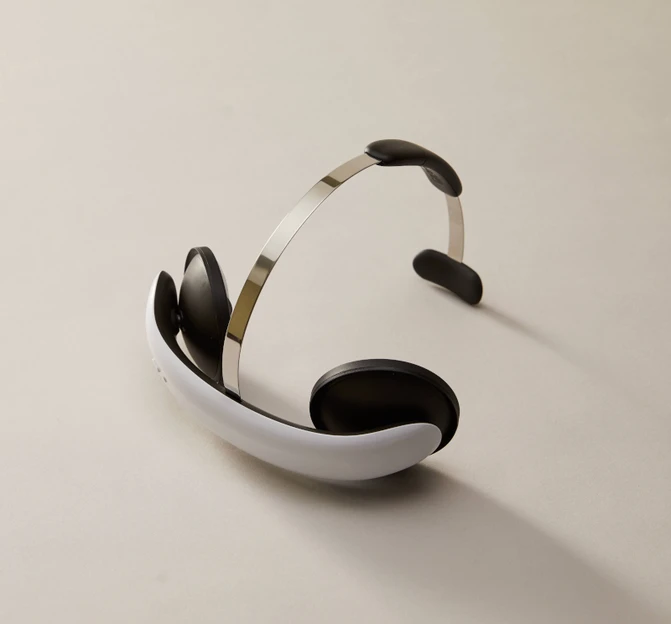
Flow
Could it be right for you?
Take a 2-minute quiz to find out if Flow could help with your symptoms of depression.
When to seek help
As a practical rule of thumb, if low mood or loss of interest lasts most of the day, most days, for more than two weeks, it is worth seeing your GP [Ref 6]. You do not have to wait until things become unbearable, and you do not have to have a tidy explanation ready.
I say this to patients often: reaching out is a strength, not a weakness. It is one of the most sensible and courageous things you can do for yourself.
Key takeaways:

Closing Thoughts
If you take one thing from this article, let it be this: naming the feeling is the first step. So much of the distress around anhedonia comes from not understanding it, from assuming it means something is wrong with who you are rather than with how you are feeling. It does not. Help exists, the outlook is genuinely hopeful, and in my experience the ordinary things really can start to feel like they have their colour and clarity back. You do not have to work this out alone.
Flow is a medical device approved for the treatment of depression. Approved treatments for depression should be discussed with and supervised by your doctor.
About the author
Dr Hannah Nearney MBChB, MRCPsych, MSc, PGDip(CAT) is a Consultant Psychiatrist specialising in general adult psychiatry, including adult ADHD, autism, and women’s mental health. She is UK Medical Director at Flow Neuroscience and a founding partner at Anchor Psychiatry Group in East Anglia. She is a Fellow on the NHS Innovation Accelerator program (2026 cohort, see: https://nhsaccelerator.com/innovations/flow-neuroscience/) which provides support to scale evidenced-based innovations like Flow tDCS in the NHS to enhance patient outcomes and service delivery. Follow her on Instagram: @psychiatristhannah
References:
- Anhedonia and Depressive Disorders (review, NIH/PMC). https://pmc.ncbi.nlm.nih.gov/articles/PMC10335915/
- Cleveland Clinic. Anhedonia. https://my.clevelandclinic.org/health/symptoms/25155-anhedonia
- Barkus E, Badcock JC. A Transdiagnostic Perspective on Social Anhedonia. Frontiers in Psychiatry, 2019. https://www.frontiersin.org/journals/psychiatry/articles/10.3389/fpsyt.2019.00216/full
- Characterizing Anhedonia: Neuroimaging Systematic Review (NIH/PMC). https://pmc.ncbi.nlm.nih.gov/articles/PMC7395022/
- NHS. Depression in Adults: Symptoms. https://www.nhs.uk/mental-health/conditions/depression-in-adults/symptoms/
- Snaith RP, et al. The Snaith-Hamilton Pleasure Scale. British Journal of Psychiatry, 1995. https://pubmed.ncbi.nlm.nih.gov/7551619/
- Anhedonia and the Brain Reward Circuitry in Depression (NIH/PMC). https://pmc.ncbi.nlm.nih.gov/articles/PMC4626008/
- Anhedonia in Trauma-Exposed Individuals (NIH/PMC). https://pmc.ncbi.nlm.nih.gov/articles/PMC6233731/
- Emotional Blunting in Major Depressive Disorder (review, NIH/PMC and Frontiers). https://pmc.ncbi.nlm.nih.gov/articles/PMC8712545/
- University of Cambridge, 2023. SSRI Emotional Blunting (Neuropsychopharmacology). https://www.cam.ac.uk/research/news/scientists-explain-emotional-blunting-caused-by-common-antidepressants
- Richards DA, et al. COBRA Trial. The Lancet, 2016. https://pmc.ncbi.nlm.nih.gov/articles/PMC5007415/
- Ekers D, et al. Behavioural Activation Meta-Analysis. PLoS ONE, 2014. https://journals.plos.org/plosone/article?id=10.1371%2Fjournal.pone.0100100
- Serretti A. Anhedonia: Current and Future Treatments (review), 2025. https://pmc.ncbi.nlm.nih.gov/articles/PMC11930767/
- Flow Neuroscience. How It Works. https://www.flowneuroscience.com/how-it-works/
- Flow Neuroscience. Evidence. https://www.flowneuroscience.com/evidence/


